Thursday, April 23, 2015


US admits two hostages killed in al-Qaeda raid

"The White House has said that a US counterterrorism operation in January accidentally killed two hostages who were being held by al-Qaeda." (BBC News)

 According to my understanding, recently, two "innocent" hostages killed by CIA drone attacks. One of the man was American named Warren Weinstein and the other was Italian named Giovanni Lo Porto. They were mistaken for a member of al-Qaeda and killed in the raid near the boader of Afghanistan and Pakistan. 
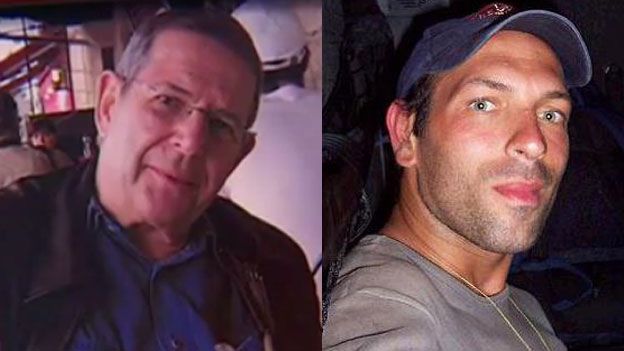

 Also, two other Americans died in the same raid, recognizing them as a member of al-Qaeda while they weren't. However, during their mission, the leader of al-Qaeda, Ahmed Farouq, killed and spokeman for military group, Adam Gadahn, got killed in different raid.

 US lauched attacks on the raid believing that it is al-Qaeda's base with no civilians. The chief commander and the White House said to take "full responsibility" for it.

Source: http://www.bbc.com/news/world-us-canada-32426859 

Bangladesh Garment Factory Disaster
 Thursday April 23 2015
Mark Perry

On April 24, 2013, the 8 story Rana building collapsed near the capital city of Dhaka in Bangladesh. The building collapse was and still is the worst disaster for the garment industry, claiming more than 1,100 lives. In wake of the collapse, the organization Human Rights Watched pledged $40 million in appropriated funds for the families of the victims, however only $15 million has yet to be distributed. The recovery effort took 20 days, with more than 100 deceased employees being found in a single day. 
 

The incident itself can be seen as a disaster in a number of ways. First off, the situation was extremely vulnerable due to the overcrowding of the building, the terrible work conditions, the lack of safety precuations and a persistent lack of safe infrastructure. This was only compounded by the grueling recovery effort which would be extremely taxing and difficult for even the most modernized country. In terms of gravity, over 1,000 individuals lost their lives due to these conditions. This was an entirely manmade disaster of huge proportions and was not isolated. 

The garment industry is commonly associated with poor worker conditions, but the situation is Bangladesh is dyer. This is because the country lacks safety precautions and enforcement and also does not have the capital to keep up with its booming economy. This leaves many pitfalls in the system. The garment industry has been one of these major pitfalls. 

The disaster however has a major silver lining in that in indicated to the world community that worker conditions in Bangladesh are dyer. This signal applies to other major garment exporting countries such as India and China. Since this incident changes have been made to the garment industry. More importantly, awareness has been raised and with the evolving field of social media, workers are able to speak out against their conditions more easily.

http://www.cbsnews.com/news/the-bangladesh-factory-collapse-one-year-later/
https://www.opendemocracy.net/opensecurity/william-gomes/reason-and-responsibility-rana-plaza-collapse
http://www.globallabourrights.org/campaigns/factory-collapse-in-bangladesh